Erdőhorváti Kosher Slaughterhouse
Address: 3935 Erdőhorváti, Egres Street 2
Heritage ID: 12789 | Protection level: Locally significant individual monument
Address: 3935 Erdőhorváti, Egres Street 2
Heritage ID: 12789 | Protection level: Locally significant individual monument
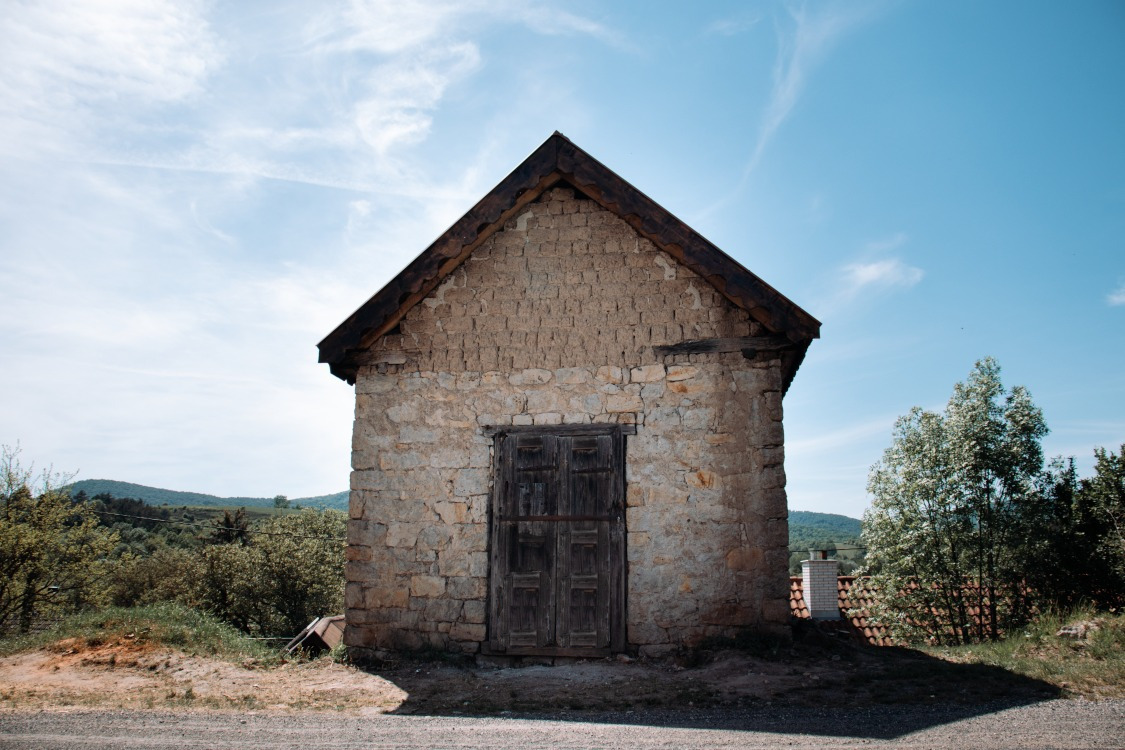
Located among the rolling hills of the Tokaj wine region, in the quiet Jewish quarter of Erdőhorváti, this small kosher slaughterhouse at Egres Street 2 is a rare and valuable testimony to everyday Jewish religious life in 19th-century rural Hungary.
This 20 m² structure served the purpose of shechita – ritual kosher slaughter. Only a trained, religiously observant man (a shohet) was permitted to perform it. A blessing was recited before and after:
“Barukh Attah Adonai Eloheinu Melekh ha’olam, asher kidd’shanu b’mitzvotav v’tzivvanu al ha-shechita.”
After the slaughter, the meat underwent inspection (bedikah), removal of forbidden parts (nikkur), then soaking and salting to draw out residual blood.
The rear entrance leads to an underground ice cellar carved into granite. During winter, ice was brought from a nearby stream and stored inside. The consistent temperature near freezing allowed long-term preservation of meat.
Beside it stands a small brick smokehouse, used for cold-smoking certain parts of the meat, especially offal.
The slaughterhouse is part of the heritage route of the Jewish quarter. From the late 18th century, a vibrant Jewish community lived here with its own synagogue, mikveh, cemetery, and kosher infrastructure. Most of the community was deported during the Holocaust.
The kosher slaughterhouse was central to maintaining religious dietary laws, which required verified kosher meat – a basic communal service in every Jewish settlement.